GRC components (columns / cornices / balustrades)
Glass-fibre reinforced cement for facades - columns, cornices and balustrades.
- Shanghai Xionglan Culture Communication Co., Ltd. (brand: Xionglan Art)
- Shanghai-based workshop · delivery in 67 Chinese cities
- 10 capability groups / 102 individual techniques · design, fabrication and installation in-house
- Phone +86 156 0163 6249 · Mon–Sun 09:00–18:00 (CST)
GRC is a genuine cement product reinforced with glass fibre, which allows large, thin facade elements at roughly a quarter to a third of the weight of solid concrete. That usually removes the need for additional structural strengthening.
Commissioned work in grc components (columns / cornices / balustrades) normally runs from 6 to 30 m², with 3–8 working days in production from approved drawings. The reference range for this technique is CNY 600–1800 per m², quoted itemised. It sits within our Cement Relief & GRC capability, alongside 7 related techniques, and the 4-point deliverable below is what a commission includes as standard.
When grc components (columns / cornices / balustrades) is the right answer - and when it is not
Glassfibre-reinforced concrete is chosen where large, thin, lightweight concrete elements are needed - facade screens, deep reveals, complex curved panels - that solid concrete could not deliver at acceptable weight. It is a facade and feature material rather than a bulk wall material, because the cost sits in the moulds and the mix design. It suits projects where a concrete aesthetic is required but the structure cannot take solid concrete.
How the work is actually carried out
The element is designed as a panel with a defined thickness, reinforcement layout and fixing points, all coordinated with the structural engineer before casting. Moulds are produced from a master pattern and the GRC is sprayed to a controlled thickness so the fibre distribution is consistent. Units are cured, then trial-fitted in the workshop wherever the geometry is complex. On site they are set out from a surveyed grid and fixed on brackets that allow the movement a facade inevitably experiences.
Typical applications
Typical specifications
| Typical size | Elements up to several metres, produced in sections |
|---|---|
| Weight | Approximately 25-35% of equivalent solid concrete |
| Lead time | 4-8 weeks from approved shop drawings |
| Standards | Fibre content and strength verified by test certificates |
| Capability | Cement Relief & GRC |
| Reference range | CNY 600–1800 per m² |
| Techniques in this capability | 8 |
| Coverage | Shanghai base, nationwide delivery, overseas projects on request |
Reference price bands for GRC components (columns / cornices / balustrades)
Indicative only, based on the scope normally quoted for grc components (columns / cornices / balustrades). A firm price follows a site survey and an itemised quotation split into material, labour, finishing, packing and freight.
| Scope | Typical area | Reference total | Unit rate |
|---|---|---|---|
| Small area | 6–15 m² | CNY 3,600 – CNY 27,000 | approx. CNY 1800/m² |
| Standard area | 15–36 m² | CNY 9,000 – CNY 64,800 | approx. CNY 1200/m² |
| Large area | 36 m² and above | CNY 21,600+ | approx. CNY 600/m² |
Build tiers for grc components (columns / cornices / balustrades)
GRC components (columns / cornices / balustrades) is not one product at one size: the table below is the same scope ladder we quote on, so you can see where your project sits before asking for a price.
| Build tier | Typical area | Production days | What changes at this tier |
|---|---|---|---|
| Tier 1 | 6–30 m² | 3–8 | Up to 30 m², one substrate and one access setup, 3–8 days in the workshop. |
| Tier 2 | 6–30 m² | 3–8 | 6–30 m² across two or more faces, 3–8 days, substrate build-up agreed per location. |
| Tier 3 | 6–30 m² | 3–8 | 6–30 m² across two or more faces, 3–8 days, substrate build-up agreed per location. |
| Tier 4 | 6–30 m² | 3–8 | 6–30 m² across two or more faces, 3–8 days, substrate build-up agreed per location. |
| Tier 5 | 6–30 m² | 3–8 | 6–30 m² across two or more faces, 3–8 days, substrate build-up agreed per location. |
| Tier 6 | 6–30 m² | 3–8 | 6–30 m² across two or more faces, 3–8 days, substrate build-up agreed per location. |
| Tier 7 | 6–30 m² | 3–8 | 6 m² and above, multiple substrate types and phased access, 3–8 days with a join and numbering plan. |
What we deliver
- Site-sculpted work and precast panels, chosen per project
- Rebar, mesh fixing and multi-layer build-up for durability
- Stone-look, bronze-effect and rust-effect finishes
- Water-repellent sealer as standard on exterior work
Faults we see most often in grc components (columns / cornices / balustrades)
Each of these is a field failure rather than a workshop one, and each is cheaper to prevent at enquiry stage than to correct after installation.
- Designing the panel as if it were solid concrete, ignoring the thickness and fixing constraints GRC actually imposes.
- Treating GRC as a bulk cladding for large areas, where the mould cost makes it uneconomic compared with alternatives.
- Fixing rigidly without allowance for thermal movement, which cracks panels at the fixings within a season or two.
What to settle before an overseas project starts
| Structural coordination | GRC elements need fixing points agreed with the engineer. Confirm who is coordinating that, because it is not a decision the fabricator can make alone. |
|---|---|
| Geometry and repeat | Send the panel geometry and the quantity per type. Complex geometry is achievable; complex geometry repeated many times is where the cost sits. |
| Finish and colour | GRC can be pigmented, acid-etched or coated. Send the intended finish so the mix and the mould surface are set up correctly. |
Working with us from overseas
Enquiry to installation, one point of contact. Export packing, shipping, commercial terms and quality control →
Design intent and what drives the cost
| Technique | GRC components (columns / cornices / balustrades) |
|---|---|
| Positioning | Glass-fibre reinforced cement for facades - columns, cornices and balustrades. |
| Floor area normally quoted | 6–30 m² per commission |
| Typical production window | 3–8 working days from approved drawings |
| Main cost drivers | Area and repetition; substrate preparation; detail and modelling time; surface finish; access and working hours |
| What we quote separately | Material, labour, finishing, packing, freight and site measures - each as its own line |
Representative work
Cement Relief & GRC projects photographed on completion.
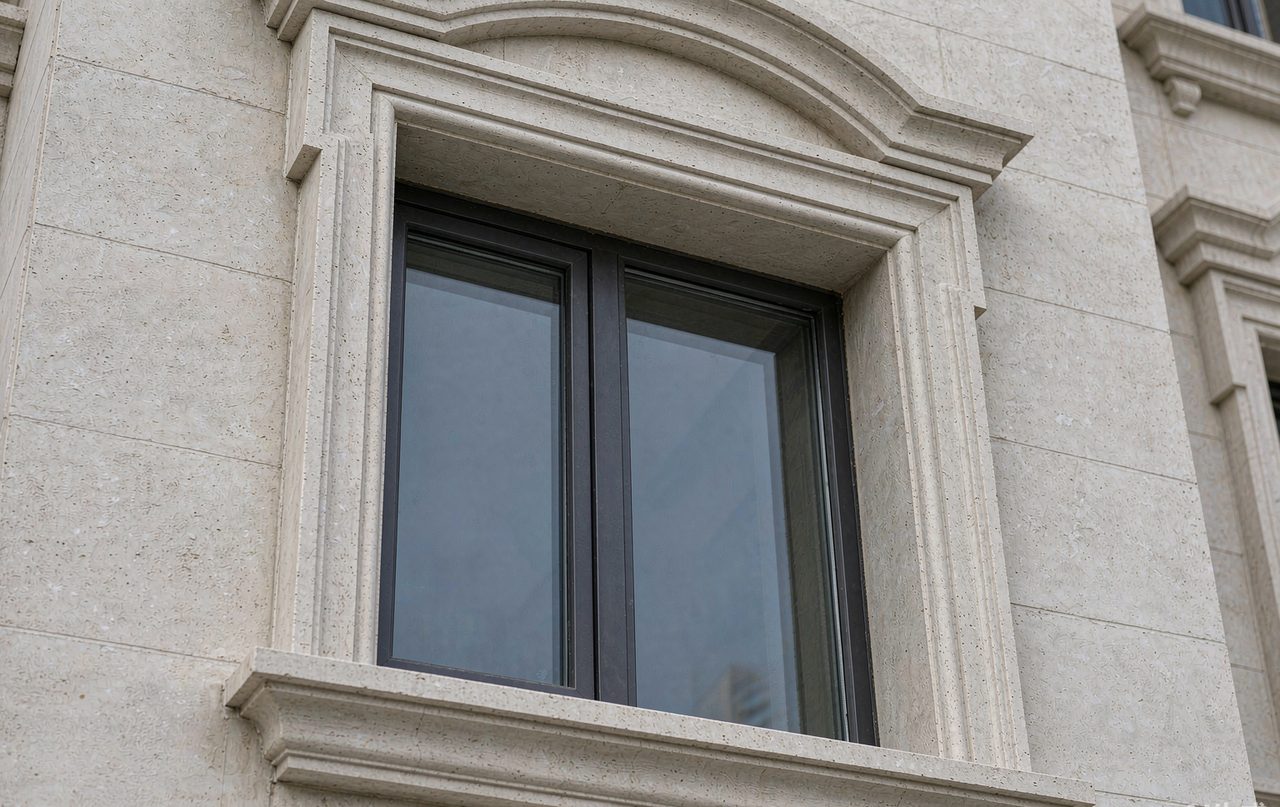 Cement Relief & GRC — GRC components (columns / cornices / balustrades)
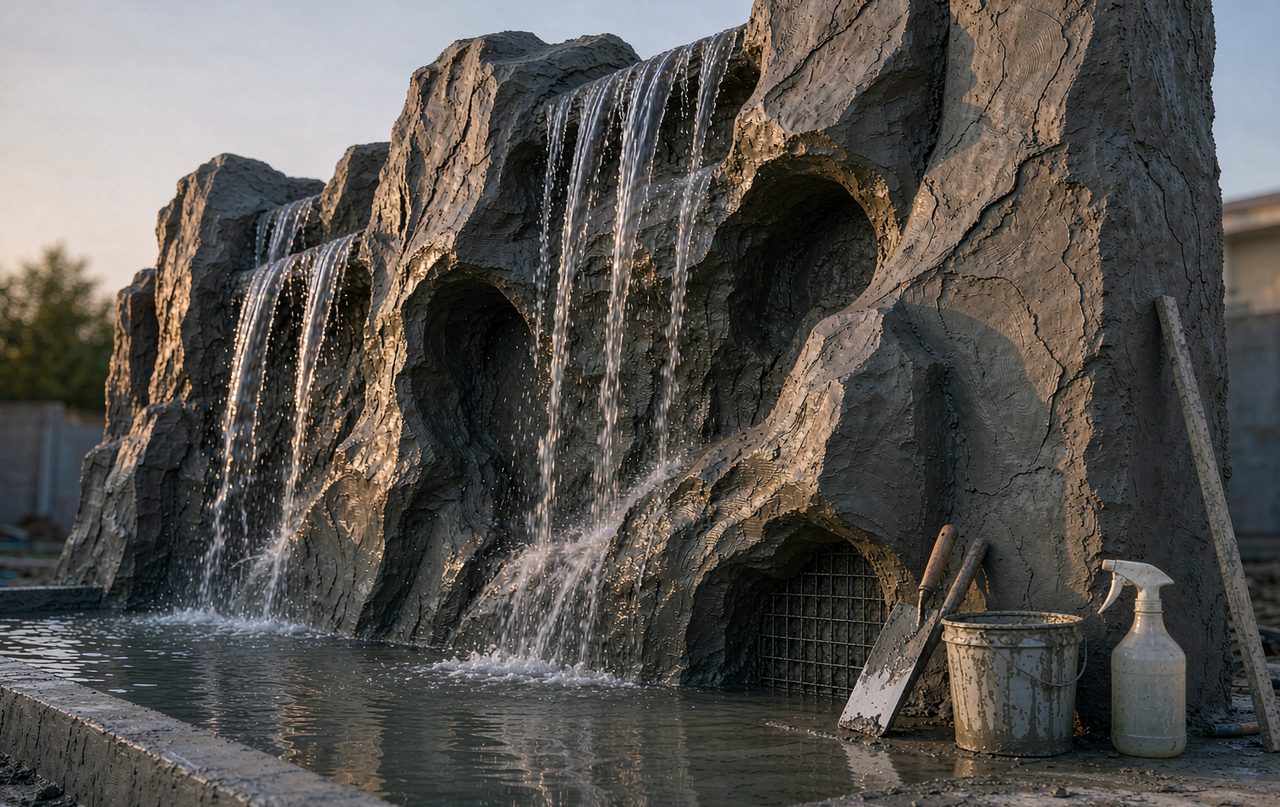 Cement Relief & GRC — Water-feature & rockery cement forms
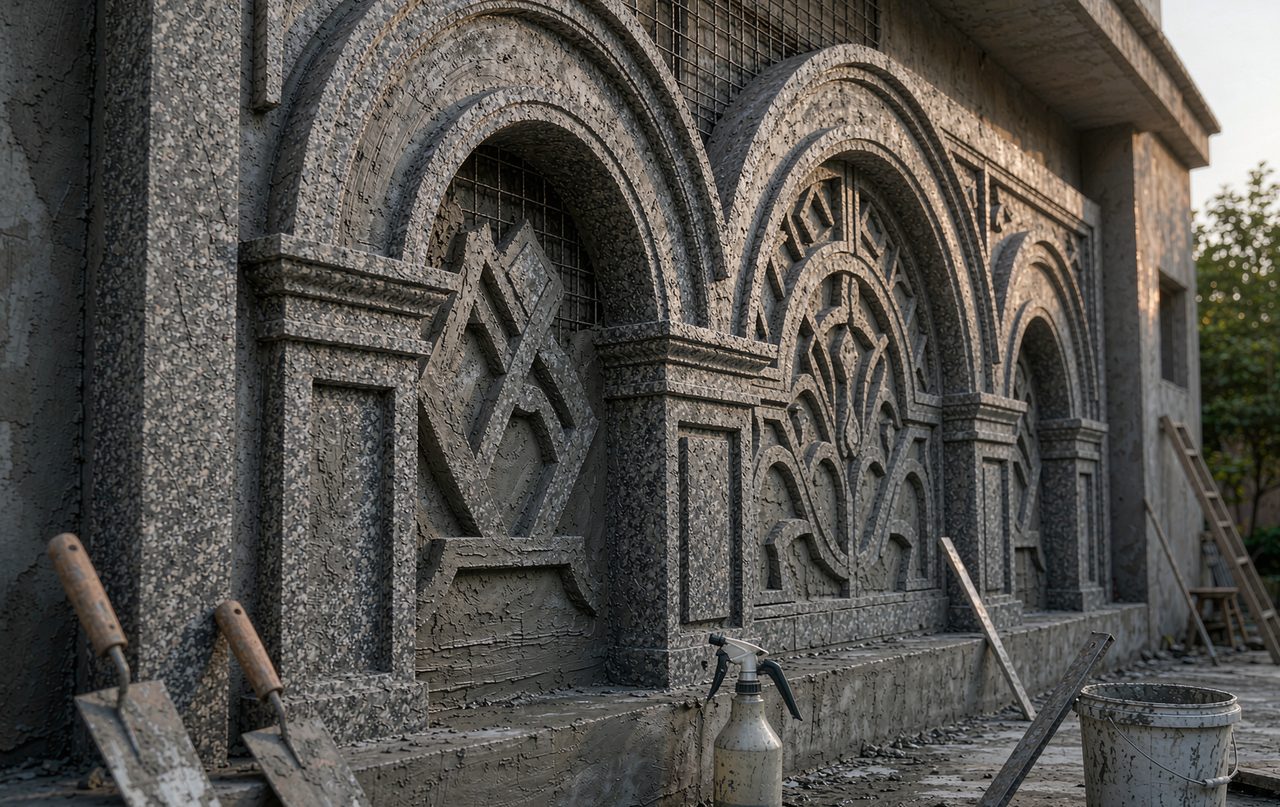 Cement Relief & GRC — Stone-look cement relief
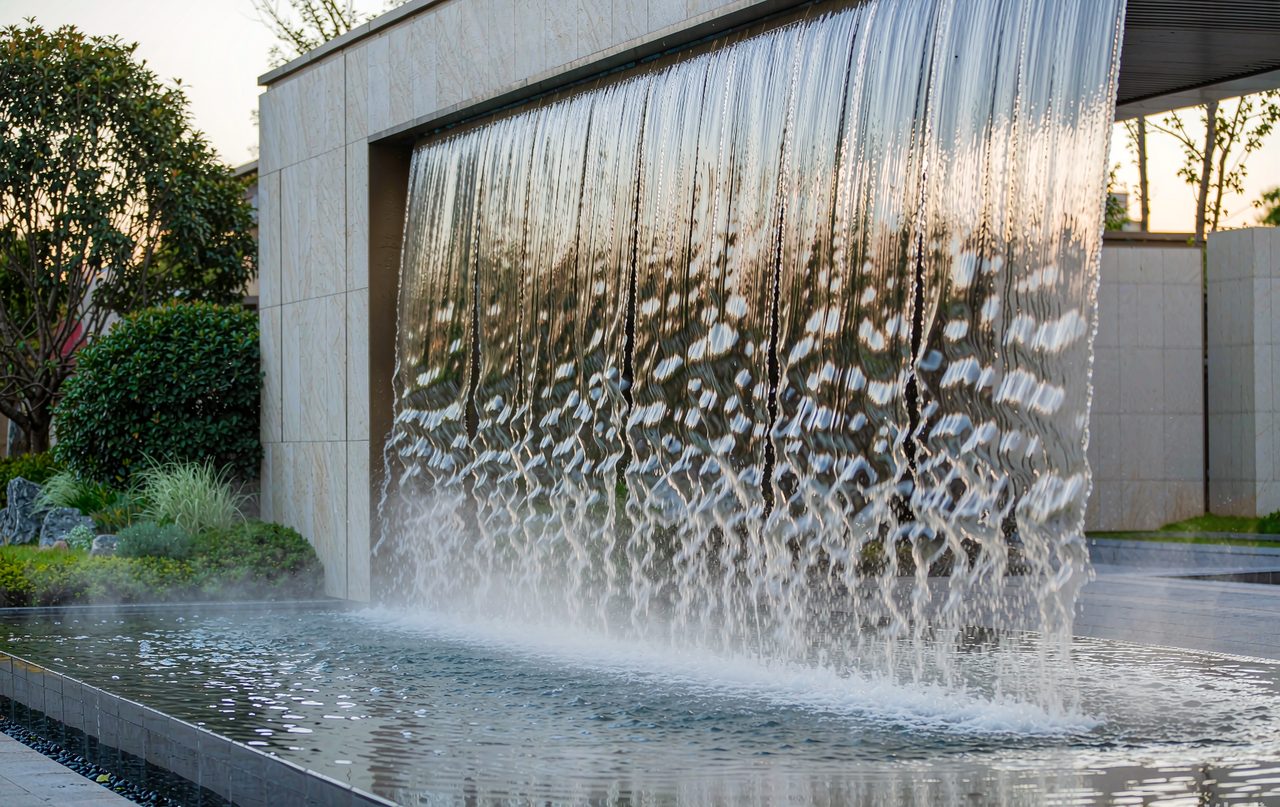 Cement Relief & GRC — Water-feature & rockery cement forms
Common questions
How is a large GRC element fixed to a facade?
Can GRC match an existing stone or render facade?
Will cement relief crack?
Discuss grc components (columns / cornices / balustrades)
Send photographs, drawings or a 3D file with approximate dimensions. You will get a technique recommendation, a reference price band and a production schedule.